

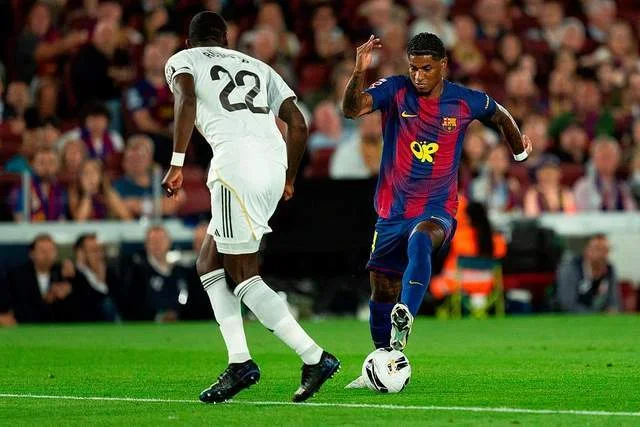
The internal conflict at Real Madrid has become a hot topic in football, impacting not only the team’s performance this season but also causing setbacks in the club’s planning. As the controversy was sparked by “Vinicius,” former Brazilian star Miranda has weighed in on the matter, acknowledging that the players must bear some responsibility. Regardless of the nature of the dispute, a constructive resolution should be sought rather than airing grievances publicly. Miranda also addressed deeper underlying issues—traditional giants like Real Madrid have strict internal hierarchies, essentially a dressing room structure based on seniority and status. With Luka Modric’s departure, the Bernabéu’s structural balance has been disrupted, making internal conflict all but inevitable.
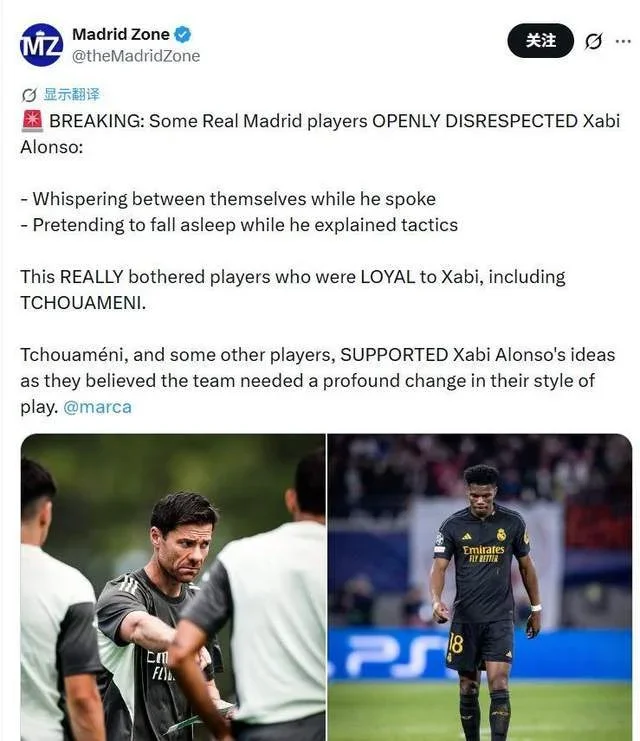
Miranda conceded that Modric’s age and declining form made it difficult for him to continue at a top-tier club. However, the current dressing room lacks true veteran leaders—players with the gravitas to command respect—leaving only superstars like Kylian Mbappé. When tensions rise, minor egos can easily escalate into full-blown conflicts. Miranda’s concerns are far from alarmist. The Bernabéu, once a fortress that struck fear into opponents, has become a powder keg of crisis. As the Brazilian icon highlighted, Modric’s exit has removed the last stabilizing pillar from the Real Madrid dressing room, and the recent violent altercation between Federico Valverde and Aurélien Tchouaméni is merely the most alarming warning before an inevitable collapse.
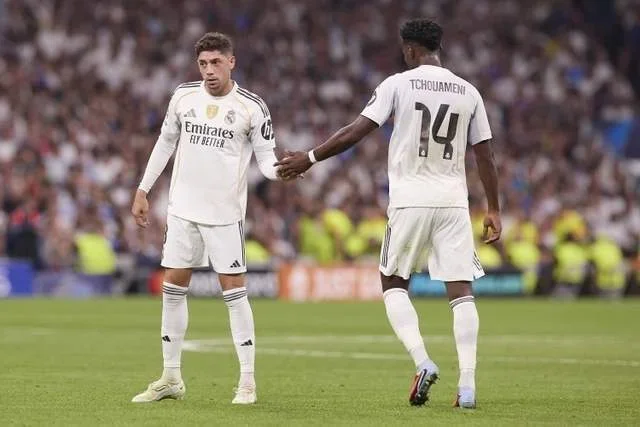
This shocking “dressing room bloodbath” has laid bare the internal fractures within Real Madrid. During a routine training session, Valverde and Tchouaméni clashed over a tackle, and the disagreement persisted into the locker room rather than being resolved by teammates. The following day, Valverde refused to shake hands and continued his provocations, ultimately leading to a physical fight where Valverde struck his head on a table corner, requiring more than ten stitches. The club responded with the highest fine in its history, €500,000 for each player. However, financial penalties cannot mask the severity of the incident—this was not a simple training spat but an inevitable eruption of mutual trust breaking down under the dual pressures of competitive failure and management chaos.
The “structural imbalance” Miranda emphasized stems from a power vacuum and competing interests between veteran legends and high-profile newcomers. Following Toni Kroos’s retirement and the departures of Modric, Nacho Fernández, and other veteran leaders, Real Madrid has lost its spiritual backbone and the enforcers of dress room discipline. The once orderly environment, overseen by senior figures, has quickly descended into a lawless jungle. Meanwhile, Mbappé’s arrival on a massive contract disrupted the existing wage structure, directly fostering potential factional divides—most notably the South American bloc led by Vinícius Junior and the Francophone camp centered on Mbappé. When Xabi Alonso attempted to implement high-intensity pressing tactics, the double standards in enforcement (such as Mbappé’s average running distance falling well below the tactical requirements without repercussions) further soured the morale of established players, planting dangerous seeds for future conflict. To make matters worse, the frequent changes in the coaching staff have left this Galácticos team without a steady hand.
From Carlo Ancelotti’s reluctant departure to Xabi Alonso’s brief and ineffective tenure due to a lack of authority, and now the interim coach Álvaro Arbeloa’s “friends-first” approach that has completely failed, Real Madrid has spiraled into a “two coaches in three years” death cycle. Arbeloa’s failure to intervene timely as the Valverde-Tchouaméni confrontation escalated was criticized internally as “enabling the conflict to spread.” When the head coach cannot control the dressing room and tactical philosophies cannot take root, the team’s on-field performance naturally plummets. This season, Real Madrid faces the embarrassment of a trophy-less campaign, with an early exit from the Champions League, having been overtaken by Barcelona in La Liga, and even the possibility of witnessing their eternal rivals celebrate the title on their own turf during El Clásico.
This commentator believes that if a figure like Zinedine Zidane were still at the helm, such internal strife would never have erupted. Real Madrid now stands at a crossroads. The club has internally acknowledged that a transformation is underway. Arbeloa’s dismissal is all but confirmed, with names like José Mourinho and Jürgen Klopp entering the picture. However, true rebuilding is far more complex than simply changing coaches. Florentino Pérez must confront three fundamental structural challenges: how to fill the midfield creativity vacuum left by Modric’s departure, how to resolve the long-standing positional overlap between Mbappé and Vinícius Jr., and how to rebuild the collective spirit and disciplinary traditions eroded by superstar privileges.
The Bernabéu’s transformation has already begun, but whether this Galácticos can undergo a structural renewal and rise from the ashes will determine whether Real Madrid enters a prolonged slump or manages to restore order and trust, returning to the peak of European football in a more modern guise. For this century-old club, losing its foundational stability is far more frightening than a trophy-less season.
